Where Digital Strategy Meets Meaningful Impact
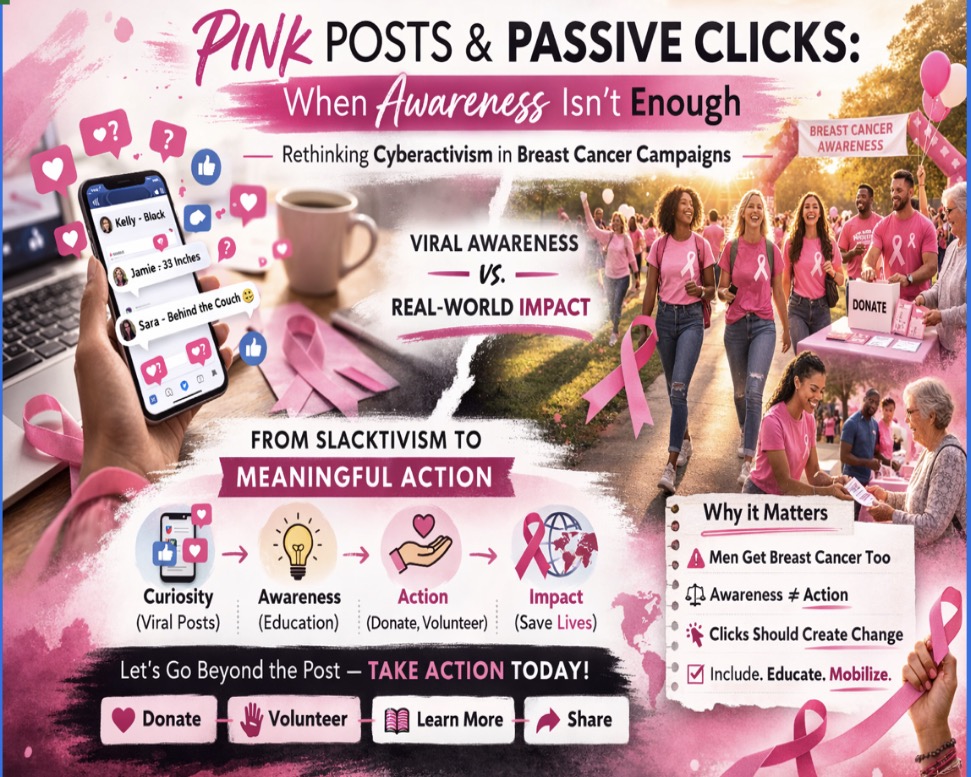
Each October, timelines turn pink. Status updates, profile frames, and viral memes flood social media feeds in support of Breast Cancer Awareness Month. Among the most memorable were the secret-status campaigns—women posting a single bra color, a purse location, or the number of “inches” it takes to do their hair. The intrigue sparked curiosity. Participation felt playful. Engagement skyrocketed.
But here’s the question social media marketers must ask: Was this activism—or just activity?
These campaigns are classic examples of cyberactivism. They spread quickly because they were easy to join. With one simple status update, participants felt aligned with a charitable cause. There was no donation requirement, no event attendance, no call to volunteer. Just a post. From a diffusion standpoint, the strategy worked brilliantly. The meme leveraged personalization, secrecy, and emotional alignment with a widely supported issue.
The campaigns often encouraged women not to explain the meaning behind their posts to men. Ironically, this excluded a demographic that is also affected by breast cancer. According to the Centers for Disease Control and Prevention, thousands of men in the United States are diagnosed with breast cancer each year. An awareness campaign that intentionally keeps men “guessing” runs counter to the goal of inclusive education. If awareness is the objective, clarity—not secrecy—should lead the strategy.
From a marketing perspective, this case highlights the difference between vanity metrics and behavioral metrics. Likes, shares, and comments demonstrate reach. They look impressive in analytics reports. However, they do not necessarily translate into scheduled screenings, raised funds, or completed volunteer hours. The Susan G. Komen Foundation reported increased interest and donations during the meme’s circulation, but because the campaign coincided with Breast Cancer Awareness Month, it is difficult to establish a direct causal link.
In today’s social media marketing industry, successful campaigns move audiences beyond symbolic participation. Awareness is important—but it is only the first step. The most effective nonprofit strategies embed direct calls to action within the engagement itself, such as clickable donation links, screening information, educational resources, and volunteer sign-ups. When digital storytelling is paired with tangible next steps, engagement becomes measurable impact.
The Pink Ribbon is globally recognized.
Breast cancer is a national awareness because of this campaign, and the cause is not mute. The challenge is sustained mobilization —meaning education: encouraging early detection, supporting research, and educating both women and men about risks and prevention. This campaign of viral pasts may seem as performance, not as a change agent. This case reminds social media practitioners that strategy must align emotion with execution. Emotional appeal draws attention. Clear action drives results. As marketers and communicators, we must design campaigns that convert curiosity into commitment. Awareness is the first, but action saves lives.
 Phoenix Rising
Leave a comment