Remember Orkut?
Let me ask you something—have you ever used a social media platform that just felt… easy?
Not easy like “simple to use,” but easy in the sense that you didn’t overthink it. You just logged on, connected, and that was it. No pressure, no strategy, no worrying about how everything looked.
That’s kind of what Orkut was.
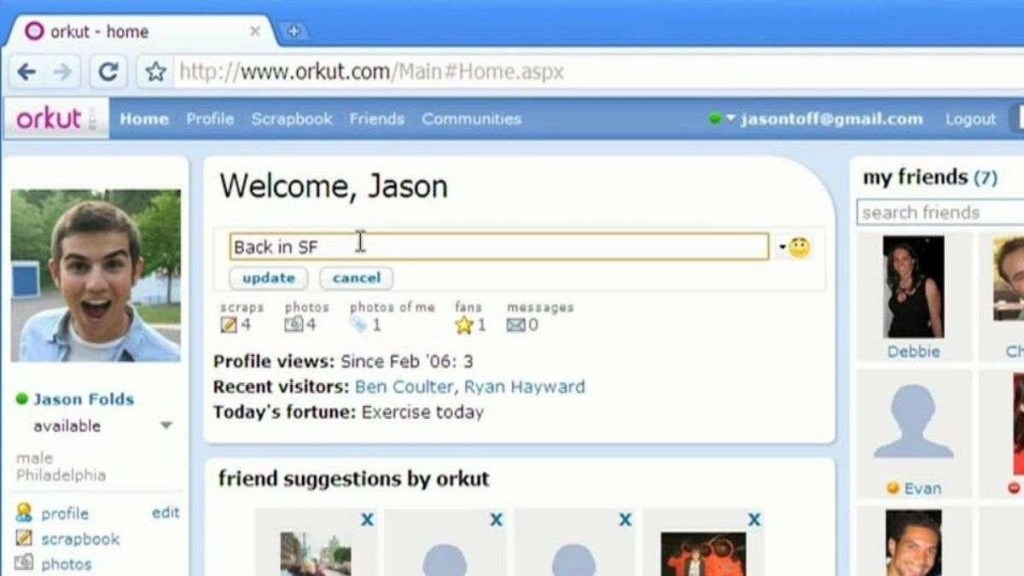
And I’ll be honest—I love thinking about platforms like this because they remind me of something I see every day in my classroom: people just want to belong. Whether it’s students, colleagues, or communities online, that need doesn’t really change. If you’ve never heard of Orkut, it was one of the first big social networking sites back in the early 2000s. You had “scraps” instead of DMs, testimonials from your friends about you, and communities for literally anything. It wasn’t polished, but that was the beauty of it. People weren’t trying to build a brand—they were just showing up as themselves.
And honestly, that’s what makes it so interesting to talk about now.
Because today, everything feels a little more curated. My students think carefully before they post. They’re aware of their audience, their image, their “presence.” Again, there’s nothing wrong with that—it’s just different.. Back then, platforms worked because they naturally became part of your daily life. You wanted to be there because your people were there.
Even though Orkut had that strong sense of community, it didn’t last.
And this is something I come back to a lot, especially when thinking about growth and change—whether in education or in technology. If you’re not evolving, you’re falling behind. Orkut didn’t keep up with what users needed next. As other platforms improved design, adapted to mobile, and created smoother, more trustworthy experiences, Orkut stayed mostly the same. And once people start feeling friction—confusion, frustration, even just boredom—they move on.
And that’s exactly what happened. Slowly, and then all at once, people left.
But what really stays with me isn’t that it failed—it’s that people still remember it.
It highlights how much more complex things have become—and I can’t help but wonder if “more advanced” always means “better.”
Let’s put it in perspective for a second…
A quick timeline of Orkut:
- 2004 – Orkut launches (and quickly gains traction)
- Mid-2000s – Becomes wildly popular, especially in Brazil and India
- Late 2000s – Other platforms start improving faster (design, usability, mobile)
- Early 2010s – Users begin leaving for newer platforms
- 2014 – Google officially shuts it down
Other platforms came in and made things easier, faster, cleaner. They adapted to mobile. They improved the experience. And at the same time, Orkut started having issues—spam, fake profiles, just little things that made the experience feel less trustworthy. And once that trust starts to slip, it’s hard to get it back.
And just like that—slowly, then all at once—people moved on.
But here’s what really sticks with me…
People still talk about Orkut.
And not in a “that was terrible” kind of way—but in a nostalgic, almost emotional way. That says something. It means the experience mattered.
It makes me think about my students, honestly. They’re growing up in a world where everything is curated. They think about how things look, how they’re perceived, how many likes something will get. And again, that’s the world they know.
But Orkut existed in a space before all of that.
It’s not just innovation. It’s not just features. It’s whether people feel like they matter in that space—and whether that space grows with them. That’s true for social media, and honestly, it’s true for education too. If we’re not listening, adapting, and evolving, we lose people.
Orkut created something real, but it didn’t grow with its users. And in a fast-moving digital world, that’s a risk.
So maybe the better question isn’t just what happened to Orkut—but what we’re building now.Are we creating spaces—online or in real life—where people feel like they belong?
Are we encouraging connection, or just performance?
 Phoenix Rising